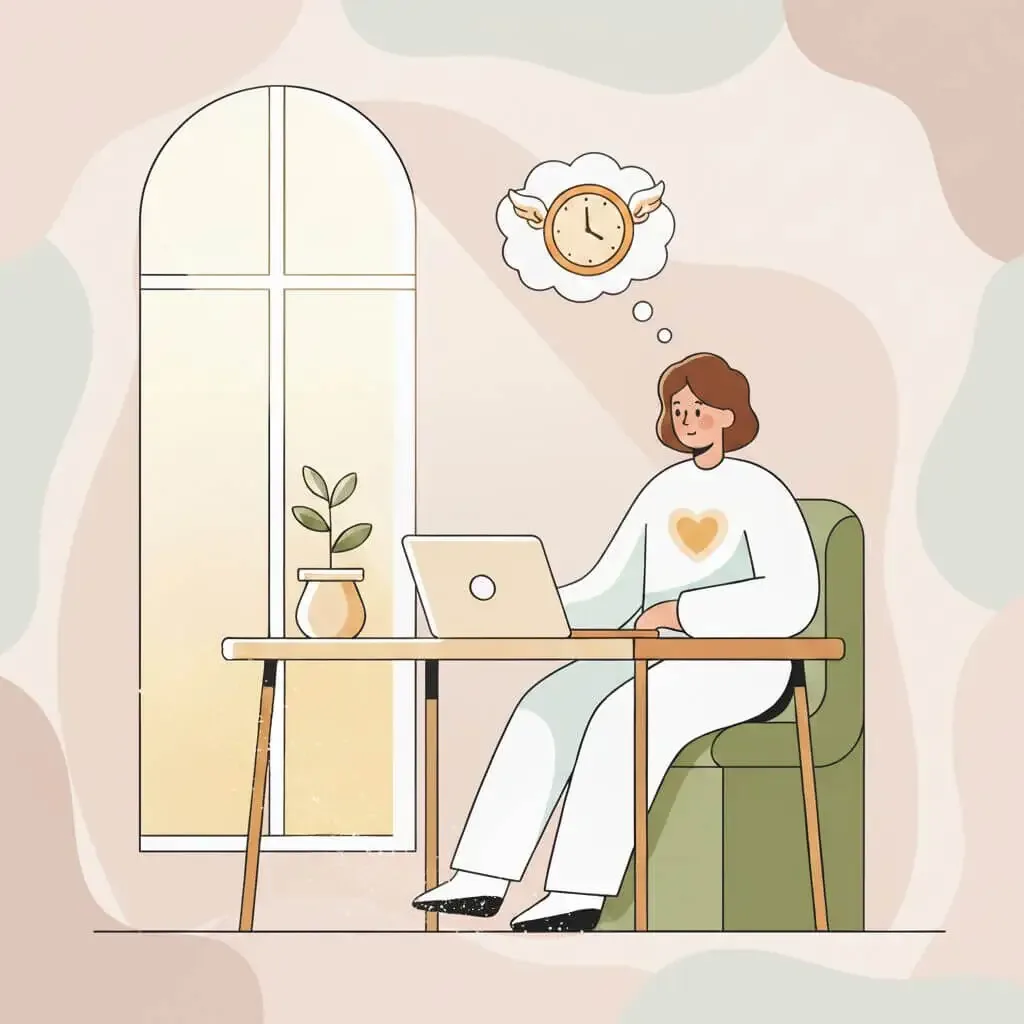

You have a deadline, opened your laptop, you are ready to complete your assignment today and ... somehow, you are cleaning your room instead.
You know you are procrastinating, yet you cannot stop. Why does that happen, and more importantly, how do you make it stop?
The Truth

Let us get one thing straight: procrastination isn't a character flaw or a permanent trait. It is simply a sequence of small decisions, those exact moments when we convince ourselves: "I'll handle this later. It isn't that urgent right now."
It feels awful, doesn't it? Wanting to finish a task while simultaneously dreading it. It feels like watching yourself hit snooze over and over, completely aware of what you are doing, yet feeling powerless to break the loop.
A large 2022 study across several Swedish universities surveyed over 700 students on their habits and mental health. The findings were clear: over 90% of students admitted procrastination regularly disrupted their lives. This highlights a fundamental reality: procrastination is an emotional issue, not a discipline problem.
Source: Frontiers in Psychology, "Procrastination Among University Students: Differentiating Severe Cases in Need of Support from Less Severe Cases", 2022.
The Misunderstanding
Procrastination isn't what you think.
People often mistake procrastination for laziness, but laziness isn't the root cause. You put off important work primarily because you are feeling threatened or anxious.
At its core, procrastination is a tug-of-war between two distinct areas of your brain.
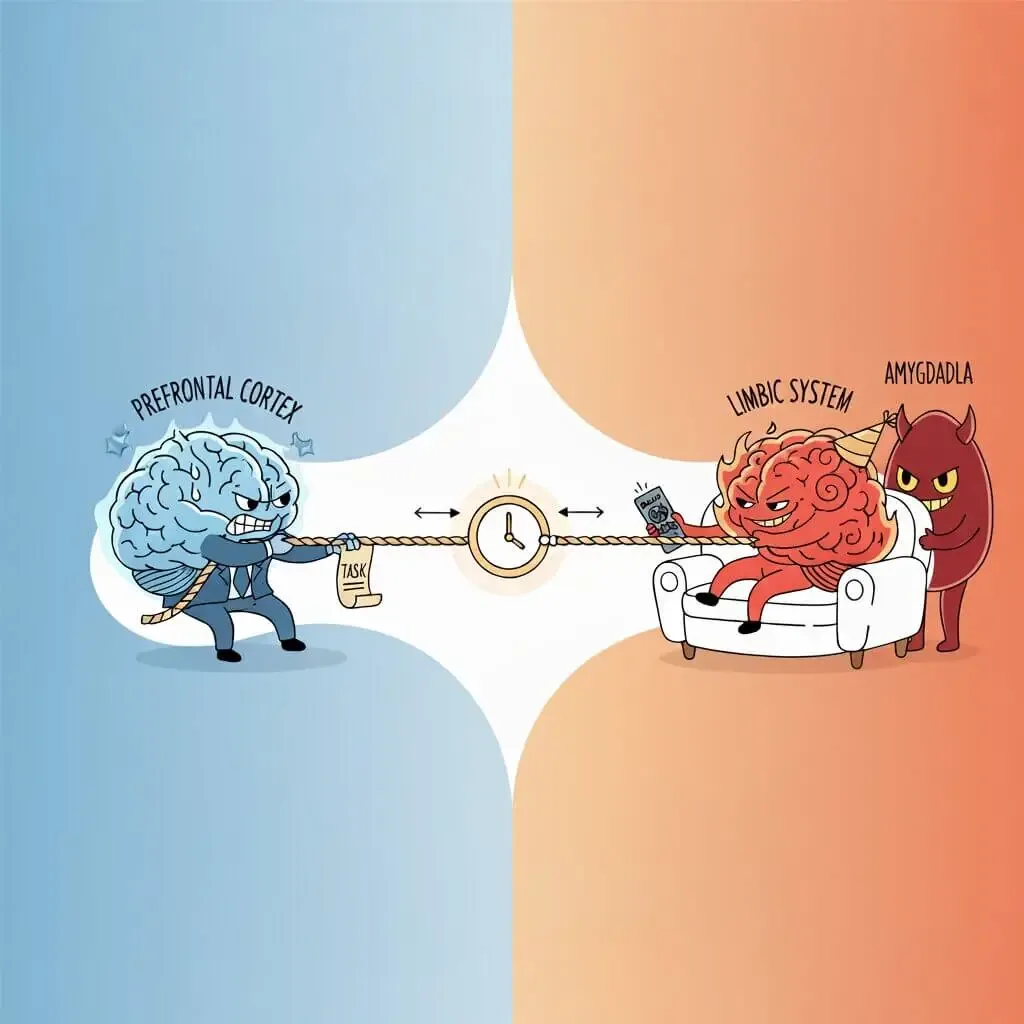
- The Prefrontal Cortex: The rational side that wants to plan, organize, and get things done.
- The Limbic System: The primitive side that seeks immediate comfort, safety, and instant relief.
Procrastination happens whenever your limbic system takes control of the steering wheel.
So why does the limbic system win so frequently?
It comes down to a small, threat-detection structure deep inside our brain: the Amygdala, which processes fear and anxiety.
When you sit down to tackle a difficult task, your amygdala flags that mental discomfort as physical danger. In response, your body releases Cortisol, the primary stress hormone. This temporarily impairs the prefrontal cortex, the precise part of your brain responsible for clear decision-making and execution.
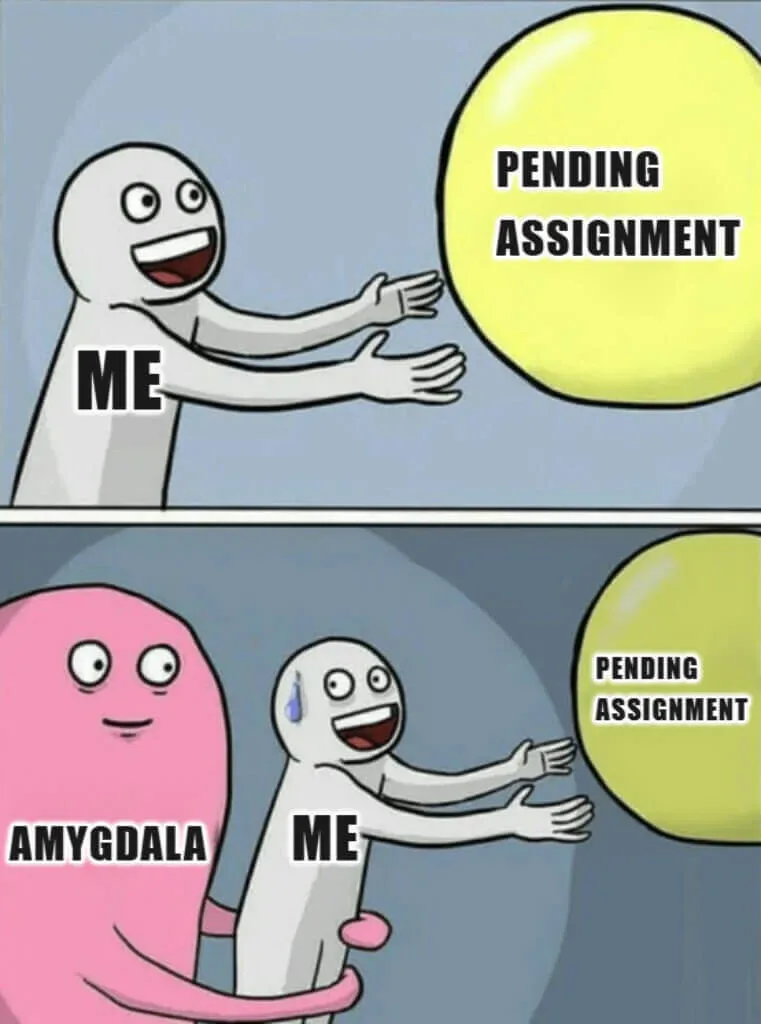
That is when your limbic system steps in with an easy escape route: "Let us do something else right now. You will feel much better." Before you realize it, hours have vanished.
Why You Fear Work

The stress response triggered by your amygdala usually stems from a few familiar root causes:
- Feeling overwhelmed and not knowing where to begin.
- Dreading the boredom or frustration of doing the work.
- Fearing that your work won't be good enough.
Stepping away from the task provides immediate emotional relief. Over time, however, this pattern builds deeper anxiety, guilt, and frustration.
Your brain learns a misleading lesson: "Avoiding work keeps me safe." To break this cycle, you have to learn how to work with your emotional triggers rather than trying to suppress them.
Breaking The Cycle

When we notice how much time we are losing, our instinct is to force strict rules and rely entirely on willpower. But harsh self-discipline rarely works because it adds more pressure, guilt, and friction to the process, making the task feel even more intimidating.
Instead of punishing yourself, focus on lowering the emotional friction attached to your work.
Here are practical steps to train your brain to take action:
- Break Tasks Into Micro-Steps
If you need to write a full report, don't focus on finishing the entire document. Focus on opening the file, then writing a single line. Starting creates momentum.
Large goals overwhelm the brain. Shrink your entry point down until it feels almost impossible to fail.
When you finish a small segment, give yourself a quick reward, like a cup of coffee or a short stretch. This teaches your brain to associate focus with reward instead of discomfort. - Identify the Real Hesitation
Ask yourself directly: "What am I actually avoiding right now?"
Taking a moment to clarify your hesitation makes a massive difference. Are you worried about failing? Feeling bored? Writing your thoughts down takes away their emotional weight.
Once you name the specific fear, it loses its grip on you. - Optimize Your Environment
Set up your environment so focus becomes the default choice. Notifications, open tabs, and nearby devices actively invite your brain to take the path of least resistance.
Instead of testing your willpower, eliminate obvious distractions. Close unnecessary browser tabs, put your phone in another room, and keep only what you need in front of you.
Removing friction isn't a sign of weak discipline; it is a smart strategy to protect your attention. - Build Clear Action Plans
Define precisely what your next step looks like before you start working.
Vague goals invite delay. A clear, specific action plan calms your stress response and eliminates second-guessing. - Schedule Your Breaks Intentionally
Distractions will happen, so plan for them instead of pretending they won't.
Tell yourself: "I will check messages once I finish this section." Knowing a break is coming allows your brain to focus on the current task without feeling deprived. - Focus on Momentum Over Perfection
The first five minutes of any task are usually the hardest. Once you get past that initial friction, your brain begins releasing dopamine, boosting your focus and drive.
Starting poorly is far better than waiting to start perfectly. When you get distracted, simply return to the task without criticizing yourself.
Progress comes from consistency, not perfection.
A Gentle Reminder
Remember, procrastination isn't something you can eliminate entirely; it is a natural part of how human brains operate.
Everyone encounters resistance, hesitation, and the temptation to put things off.
The difference between staying stuck and moving forward comes down to taking action despite that resistance.
We all face the exact same internal friction.
Choosing to take just one small step forward changes everything.
The next time your mind tells you "later," acknowledge the thought, and take one small step right now.
Why do I suddenly feel the urge to clean my entire house when I have a huge deadline?
Your brain is looking for a quick escape from the stress and anxiety of your main project. Productive procrastination gives you instant emotional relief and a temporary sense of control, making you feel safe. To bypass this, shrink your actual project down to a tiny micro-step so it doesn't trigger that internal alarm system.
I feel like I just don't have enough willpower. How can I build more self-discipline?
Stop beating yourself up and realize that willpower isn't the real problem here. Forcing strict rules and punishing yourself only creates more stress, which actually fuels the urge to avoid your work. Instead of trying to force it, focus on lowering the emotional friction by clearing away distractions and promising yourself a quick reward when you finish a small task.
How do I get myself to start when a project feels completely overwhelming?
Break the project down into steps so ridiculously small that they feel almost impossible to fail. Tell yourself you only need to open the file or write for just two minutes before you can take a break. Starting is always the hardest part, but taking that tiny first step triggers the dopamine you need to build real momentum.