

Imagine waking up tomorrow morning and your very first thought is about how hard it is to breathe. Not a deep, satisfying breath to start the day, but a persistent tightness in your chest. A dry cough that refuses to go away. A body struggling to pull in air. That is daily life for roughly 3 million people living with idiopathic pulmonary fibrosis (IPF). It is a devastating, rare lung disease that slowly scars lung tissue from the inside. Doctors have long considered it progressive, incurable, and fatal, with most patients given just three to five years after diagnosis.
For decades, medicine struggled to offer real answers. Then, an artificial intelligence accomplished what decades of conventional research could not: it designed a novel drug candidate that actually helped reverse the damage. Published in Nature Medicine in June 2025, the clinical findings mark a historic turning point for medicine.
A Disease With No Name, No Cause, No Cure
The word "idiopathic" is simply medical shorthand for "we do not know the cause." In patients with IPF, scar tissue (known as fibrosis) steadily builds up across the tiny air sacs in the lungs. You have about 300 million of these microscopic sacs, and they are responsible for passing oxygen into your bloodstream with every single breath. As scar tissue forms, the lungs stiffen and lose their elasticity. Taking a deep breath becomes as difficult as trying to inflate a thick rubber balloon.
Patients often report that walking up a single flight of stairs feels like running a marathon. Everyday moments like talking on the phone, sharing a laugh, or sitting down for dinner can set off painful coughing fits that last for minutes. Over time, relying on supplemental oxygen tanks becomes unavoidable. To make matters worse, early symptoms like a dry cough, fatigue, and shortness of breath mimic common conditions like asthma or heart disease. As a result, patients are often misdiagnosed for months or years while the condition silently progresses.
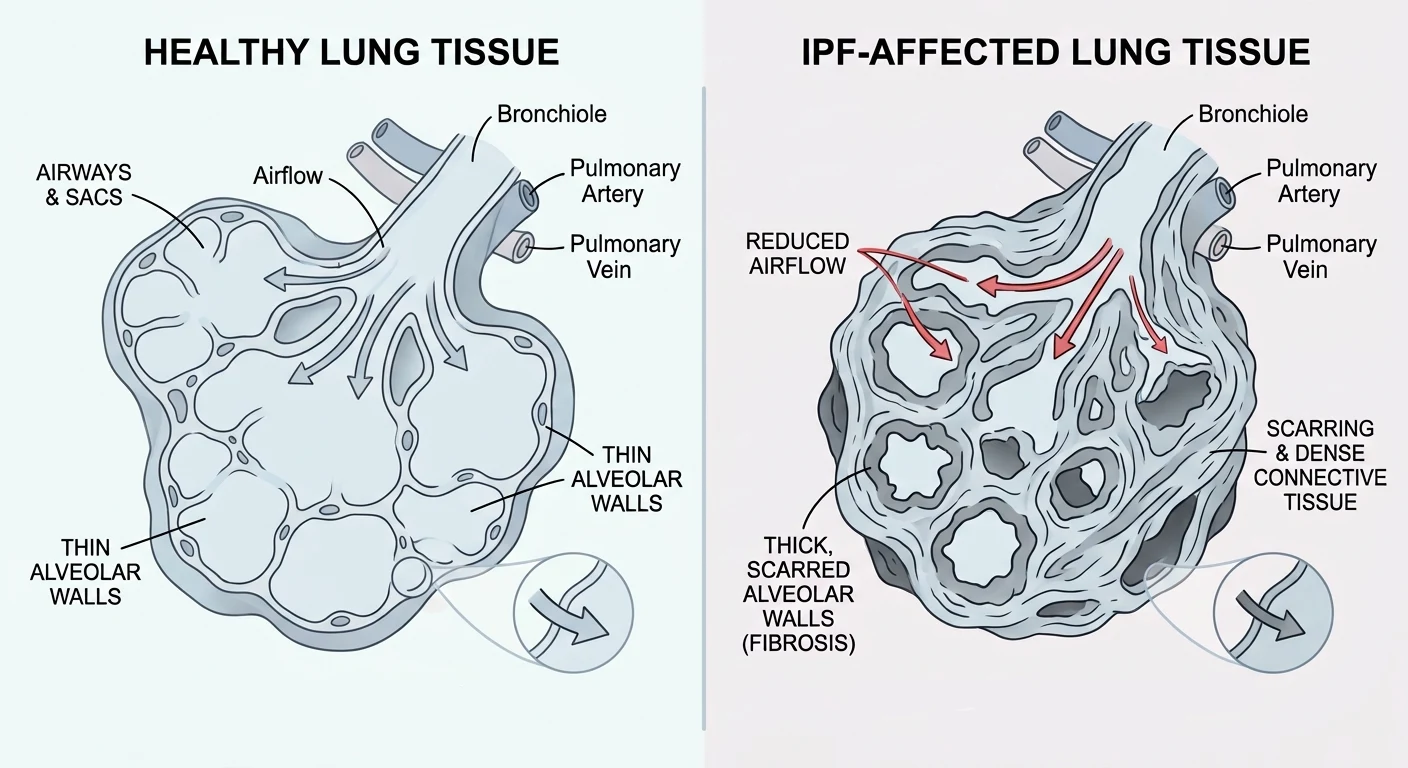
Current FDA-approved medications like nintedanib, pirfenidone, and nerandomilast can slow down the formation of scar tissue, but they cannot stop or repair it. Until now, no treatment had ever measurably restored lost lung function in an IPF patient.
Enter the Algorithm That Changed Everything
In Cambridge, Massachusetts, the biotech firm Insilico Medicine took a completely different approach. Instead of modifying existing medications, they used their AI platform, Pharma.AI, to search for a hidden biological target: a driver of lung fibrosis that human researchers had not yet recognized.
The system identified a specific protein called TNIK (Traf2- and NCK-interacting kinase). TNIK had never been a major focal point in traditional pulmonary research. However, by scanning massive datasets of biological pathways, genetic profiles, and molecular interactions, the AI identified TNIK as a core engine behind the scarring process. The platform did not stop at identifying the target; it proceeded to custom-design a unique chemical compound to inhibit it.
AI, as an advanced technology, is already playing a crucial role in many aspects of medical practice, including drug discovery and clinical research, and we expect to see the real clinical benefits it brings to patients.
- Dr. Zuojun Xu, Professor at Peking Union Medical College & Lead Investigator, Phase IIa Trial
The resulting molecule was named Rentosertib (also designated as ISM001-055). The speed at which it moved from concept to clinical reality surprised even seasoned researchers.
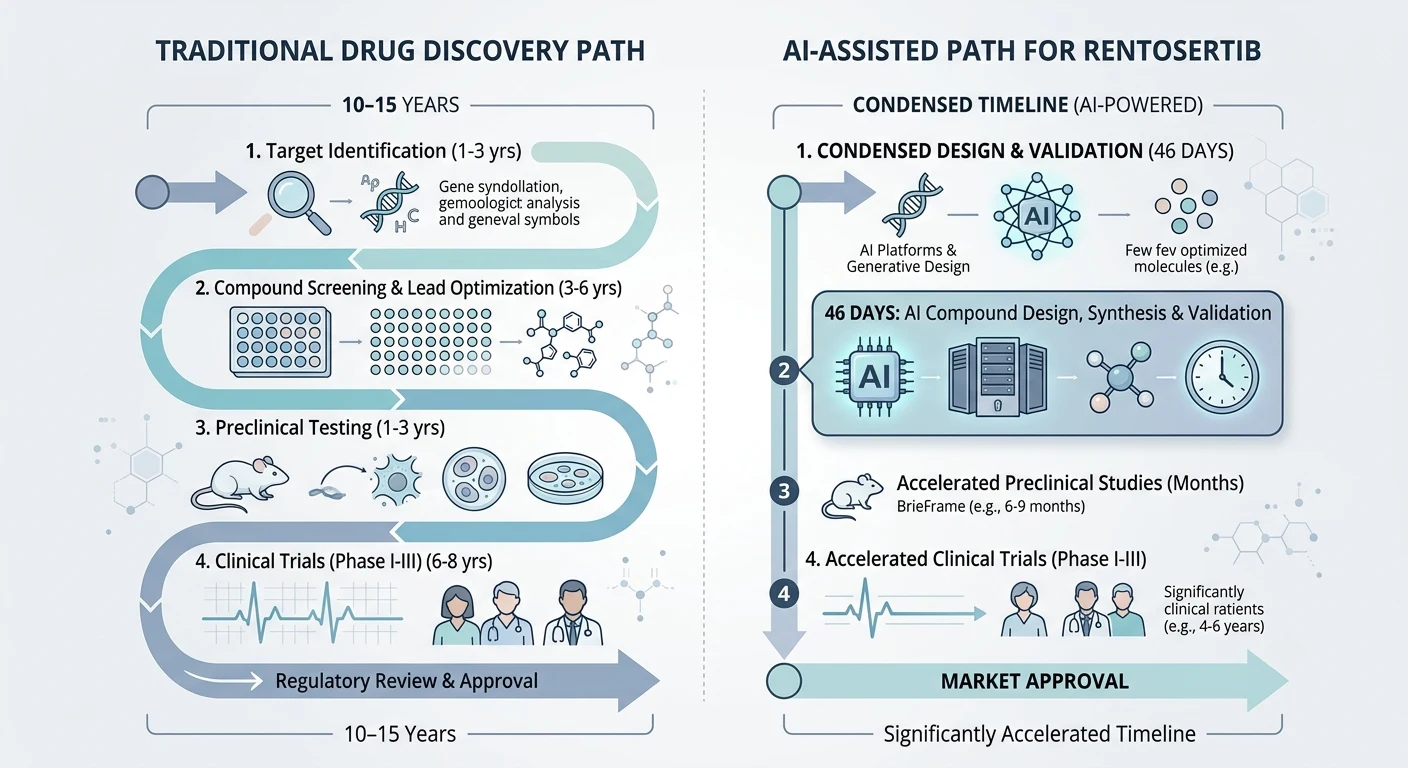
46 Days: What Normally Takes Over a Year
The timeline alone represents a massive leap forward. From initial concept to a validated, lab-tested compound, Insilico's AI completed the molecular design work in just 46 days. Using conventional laboratory methods, identifying a viable molecule, testing it against biological targets, and refining its structure typically takes more than a full year, if not several.
This speed drastically shifts the economics of pharmaceutical development. Developing a single new drug from concept to pharmacy shelf usually requires 10 to 15 years and over $2 billion, with roughly 90% of experimental compounds failing along the way. By streamlining the earliest stages of research, AI drastically lowers cost barriers. That makes it viable to explore treatments for rare or overlooked conditions that were previously considered too expensive to pursue.
The Trial That Proved It Wasn't Just Hype
Promising laboratory models are one thing, but proving a drug works safely in human bodies is the true test. The Phase IIa trial published in Nature Medicine provided rigorous proof. Conducted as a double-blind, placebo-controlled study (the gold standard of clinical research), neither the patients nor the clinical teams knew who received the real medication versus the placebo.
The study enrolled 71 IPF patients across 21 clinical centers in China over a 12-week period. Researchers tracked forced vital capacity (FVC), which measures the maximum amount of air a person can exhale in one breath. In a progressive disease like IPF, FVC consistently declines over time.
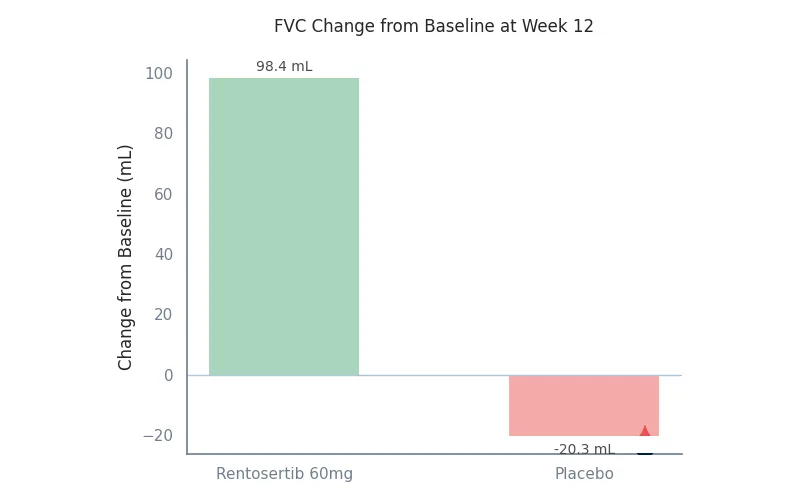
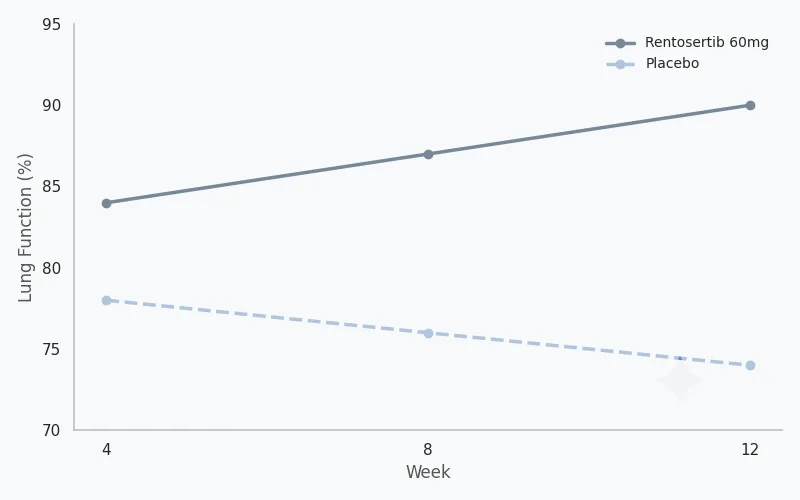
In the placebo group, patients lost an average of 20.3 mL of lung capacity over the 12 weeks, matching the typical downward progression of the disease.
In contrast, patients receiving the highest dose of Rentosertib (60 mg) experienced an average lung function gain of 98.4 mL. Instead of merely slowing the decline, the treatment helped rebuild capacity. That created a total swing of nearly 119 mL compared to placebo, a remarkable difference in pulmonary medicine. Patients also reported measurable improvements on the Leicester Cough Questionnaire, experiencing fewer coughing fits and easier breathing day to day.
It not only reflects ISM001-055's potential to slow disease progression but also suggests its capability to stop or even reverse it.
- Dr. Zuojun Xu, Lead Investigator, Nature Medicine, June 2025
This Isn't a One-Off: It's a Pattern
While Rentosertib offers clear visual proof of progress, it is part of a larger, systemic shift across medicine. Computational platforms are increasingly proving their worth in real-world clinical trials.
Back in 2020, UK-based Exscientia partnered with Sumitomo Dainippon Pharma to advance the first AI-designed molecule into human trials. That compound, DSP-1181, was created to treat obsessive-compulsive disorder (OCD). Where traditional drug discovery typically spends four to five years reaching human trials, Exscientia's platform delivered a candidate in under 12 months by analyzing 350 target molecules instead of the standard 2,500.
Industry-wide data reflects this evolution. Research from 2024 revealed that AI-discovered candidates achieve an 80% to 90% success rate in Phase I human trials, compared to the historical 40% to 65% success rate of conventional methods. Machine learning tools are proving remarkably effective at selecting biological candidates that actually perform safely in human tissue.
What This Means for You
Even if you have never encountered IPF before, the broader implications of these trials affect the future of medicine as a whole. What Insilico and Exscientia demonstrated is that drug discovery can become faster, more targeted, and far more accessible for conditions that were once neglected.
From rare genetic disorders to antibiotic-resistant infections and complex neurodegenerative conditions like Alzheimer's, machine learning models can process massive multi-variable datasets without bias or fatigue. Powerful tools like DeepMind's AlphaFold system, which mapped 3D protein structures and earned its creators the 2024 Nobel Prize in Chemistry, now serve as foundational engines for modern molecular discovery.

To be clear, algorithms are not replacing medical researchers, physicians, or the rigorous standards of multi-phase clinical trials. Experimental drugs must still prove their safety and effectiveness in human patients. What technology offers is a faster, more precise map to reach those trials in the first place.
The Breath That Tells the Whole Story
Behind the data points were 71 individuals in China living with a terminal lung condition. They entered a 12-week clinical study without knowing whether they were taking an active drug candidate or a placebo. By the end of those three months, the participants who received the highest dose of Rentosertib saw measurable, documented improvements in their lung function.
Restoring health is the ultimate goal of medicine. In the case of IPF, an algorithm helped unlock a path that had evaded human researchers for generations.
Rentosertib is now progressing into larger Phase IIb trials, with Phase III studies planned to follow. If those trials confirm the early findings, patients diagnosed with IPF may soon have access to a treatment originally mapped out by an algorithm in just 46 days, created because a machine looked at biological data from an entirely new perspective.
Sources
- A generative AI-discovered TNIK inhibitor for idiopathic pulmonary fibrosis - nature.com
- AI drug enters human clinical trials - InformationAge
Can I get my hands on Rentosertib right now if I or a loved one has IPF?
Not quite yet, as the drug is still moving through the clinical trial process. It just completed a successful Phase IIa trial and is currently heading into Phase IIb and Phase III testing to ensure it is completely safe and effective for larger groups of people. You can talk to your doctor or check clinical trial registries to see if there are opportunities to enroll in these upcoming studies.
What makes this AI drug different from the IPF medications my doctor already prescribed?
Look closely at how your current medications work, which only slow down the scarring process. Rentosertib actually helped patients regain lost lung capacity in clinical trials, showing an average gain of nearly one hundred milliliters. It is the first treatment of its kind designed to potentially stop or even reverse the actual damage.
How does an algorithm actually design a medicine in just 46 days?
Think of it as a superpowered search engine mapping millions of biological combinations all at once. Instead of humans spending years in a lab testing molecules one by one, the AI scanned genetic profiles to pinpoint a specific protein called TNIK and custom-built a molecular structure to block it. This bypasses years of traditional trial and error to deliver a targeted candidate in a fraction of the time.