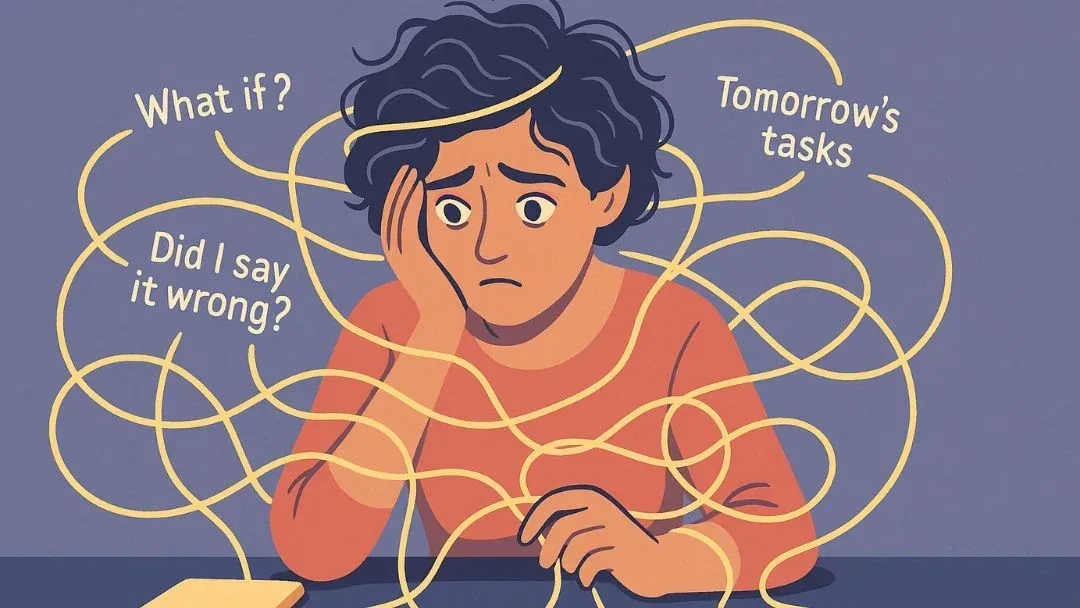

You know what you need to do. You've known for weeks. But instead of doing it, you've been thinking about doing it, which feels productive, and that's exactly the problem.
The Trap
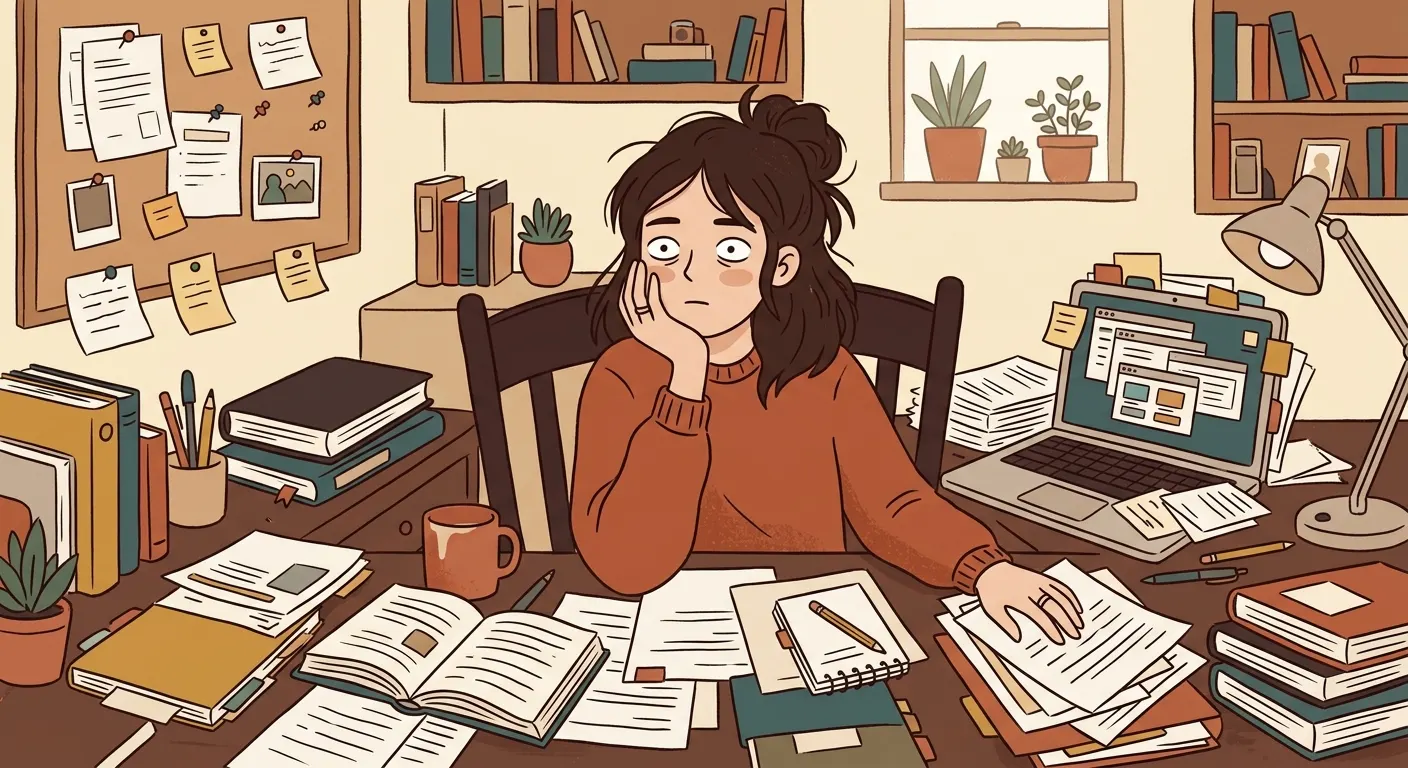
Overthinking feels like genuine work. That is precisely why it works so well as a trap.
When you spend two hours researching options, weighing pros and cons, and sketching out plans, your brain treats that effort as real output. You walk away tired. You feel like you moved the needle.
You didn't. You just found a more comfortable place to stand still.
Overthinking mimics progress so convincingly that it quickly becomes a full-time substitute for it. The trickiest part is that no one around you can tell the difference either. You look busy. You sound thoughtful. You say all the right things, like "I'm still figuring it out," "I just need a bit more clarity," or "I want to make sure I make the right call."
It is a perfect disguise, and the person it fools most is you.
What You're Actually Avoiding
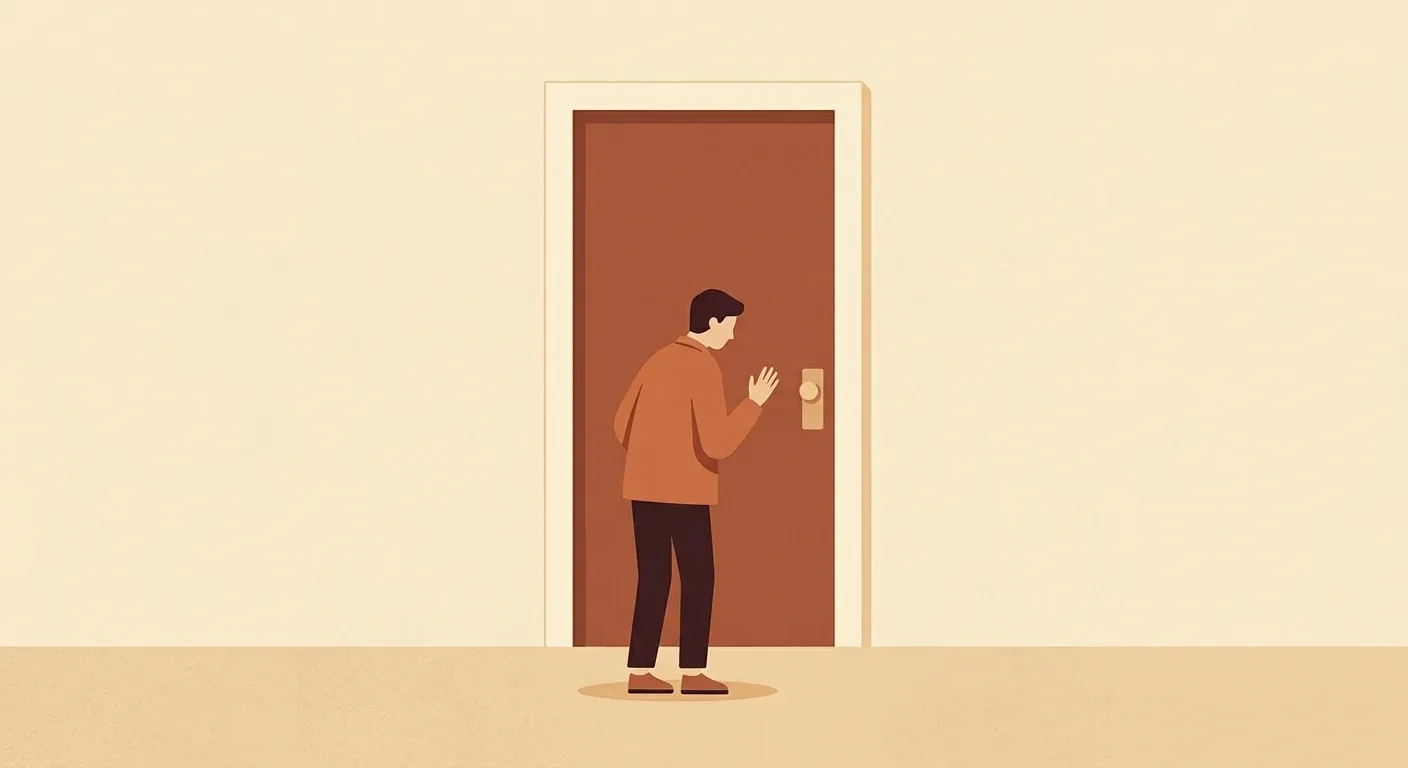
There is almost always a single, specific issue sitting underneath all that mental motion.
It could be a tough conversation you keep postponing, a job you want to leave, or a project you are secretly terrified to launch and watch fail. It is something with a real consequence attached to it, where thinking can no longer alter the outcome.
All this thinking isn't confusion. It's protection.
As long as you are still working things out, you never have to face what actually happens when you try. You get to stay inside the version of the story where you might still succeed. The outcome stays open, and you haven't failed yet simply because you haven't started.
Overthinking is how you keep yourself safe from the exact thing you want.
More Information Won't Help

You have read enough articles. You have polled enough friends. You have listened to the podcasts, watched the breakdowns, and thought through every angle twice.
You're not under-researched. You're under-committed.
Every extra opinion you collect is just delay disguised as due diligence. You likely know the exact moment preparation crossed the line into procrastination with better posture.
Seeking a tenth perspective was never going to give you clarity. It was only ever going to give you another excuse to wait.
The Moment You Know It's Avoidance

You can tell it has turned into avoidance when the thinking itself becomes the routine.
You run through the same arguments, end up at the exact same point of uncertainty, and close the day without taking action. Again.
That cycle isn't problem-solving. It is a holding pattern, and holding patterns never land the plane.
There is another obvious sign. The instant you imagine taking action, you feel a brief flash of discomfort before your mind steps in to reason it away. That split second of fear or vulnerability is what the entire mental routine is built to shield you from. You aren't overthinking and then avoiding action. You are overthinking because you are avoiding it.
Why Your Brain Is Very Good At This

Your brain isn't broken. It is running the exact programming it was designed for.
To your brain, uncertainty feels dangerous. Its primary job has always been to keep you safe and comfortable, not to help you navigate career risks or initiate difficult conversations. So when something feels high-stakes, it builds a wall of complexity. It raises questions, spots edge cases, and reminds you of past mistakes.
That instinct was vital for basic survival. It is far less helpful when the task you are putting off is simply sending an email.
The issue isn't that your brain is actively working against you. It just hasn't updated for a life where the most rewarding outcomes require leaning into discomfort rather than running from it.
What Clarity Actually Feels Like

Most people assume clarity must arrive before they make a decision. It usually works the other way around.
Clarity shows up after you move. You take a step forward, uncertain, slightly underprepared, and a bit nervous, and the fog clears as you take action, not while you sit back deliberating. You learn what you really think once you are actively handling the situation rather than running mental simulations from the sidelines.
Decisive people don't usually possess secret information. They have simply stopped mistaking preparation for progress and learned to move forward before feeling entirely ready.
The Only Way Out

You don't need a new framework or a pristine morning routine.
You just need to do the work, even if it is messy and early, rather than waiting for perfection that never arrives.
Readiness is just a feeling your brain manufactures to keep you comfortable. It is not a goalpost you eventually pass. No one feels fully ready the first time they do something that truly matters.
Thinking has done all it can do for you here.
You already know what needs to happen next.
How do I actually stop planning and just start taking action?
Pick the smallest, lowest-stakes step you can take in the next five minutes and do it right now. Stop waiting for a wave of motivation because action is what actually generates momentum. Once you get moving, the anxiety fades and the task gets easier.
But what if I make the wrong decision because I didn't think it through enough?
Accept that you might make a mistake, but realize that making a wrong move gives you real data you can actually use. Sitting still and analyzing forever gives you absolutely nothing but wasted time. You will learn far more from a messy attempt than you ever will from a perfect plan.
How do I figure out what it is I'm actually trying to avoid?
Pay attention to that brief flash of discomfort or fear you feel right before your brain starts rationalizing why you should wait. That split second of anxiety is your compass pointing directly at the real issue. Ask yourself what consequence you are terrified of facing, and you will instantly find your answer.