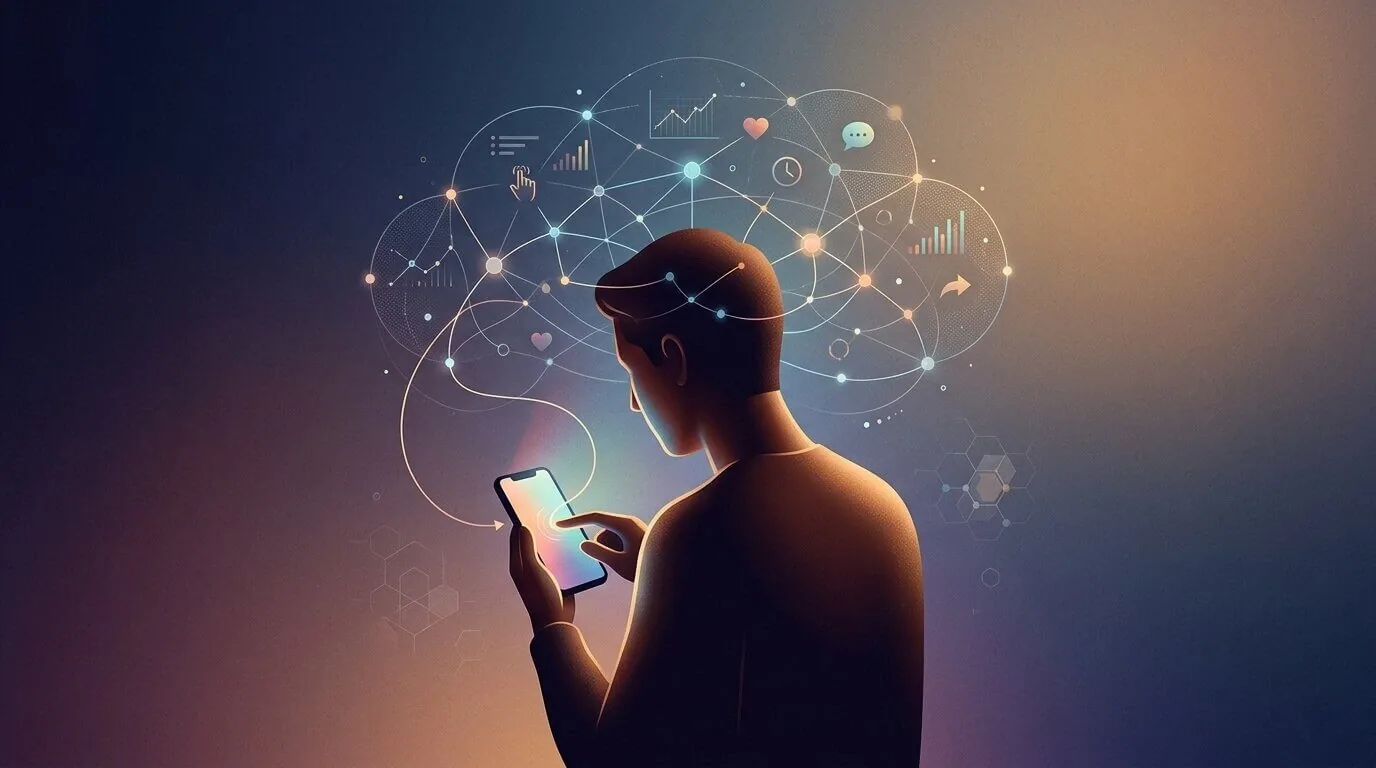

Every like, every share, every second you hesitate before scrolling: AI is watching. Not to spy on you, but to build a digital version of your mind that's accurate enough to predict what you'll want next.
It learns from millions of tiny signals you leave behind every day. Over time, those signals become patterns, and those patterns turn into predictions. That's why your feed often feels like it knows exactly what you're craving before you even realize it yourself.
It isn't magic, and it isn't mind reading. It's math, machine learning, and billions of data points working behind the scenes to map your daily habits. Here is how predictive AI actually works, why it feels so uncannily accurate, and where the technology is heading next.
How AI Learns Your Habits

While you scroll through your daily feed, the underlying AI actively tracks your every move:
- What you click or like
- What you share with friends
- How many seconds you linger on a specific post
- The creators and topics you engage with most
All of these interactions feed into machine learning models that analyze behavior patterns across millions of users. These systems construct a profile known as a User Embedding. This profile isn't interested in your real name, age, or face; it maps your digital personality, including your interests, routines, and emotional triggers. By constantly comparing your habits to millions of similar users, the AI doesn't just react to what you do: it anticipates what you'll want next.
Ever wondered how things suddenly go viral on social media?
That's the same system at work. By monitoring real-time activity across millions of accounts, the algorithm detects early spikes in attention. Once it spots a trend gathering momentum, it pushes that content into wider distribution until it seems to appear everywhere at once.
If thousands of people who liked A also liked B, and you liked A, guess what shows up next on your screen?
This technique is called Collaborative Filtering, and it powers virtually every modern recommendation engine. The system keeps you scrolling by balancing familiar topics with subtle discoveries, serving content you already love alongside fresh ideas that people like you have enjoyed.
The Dopamine Loop
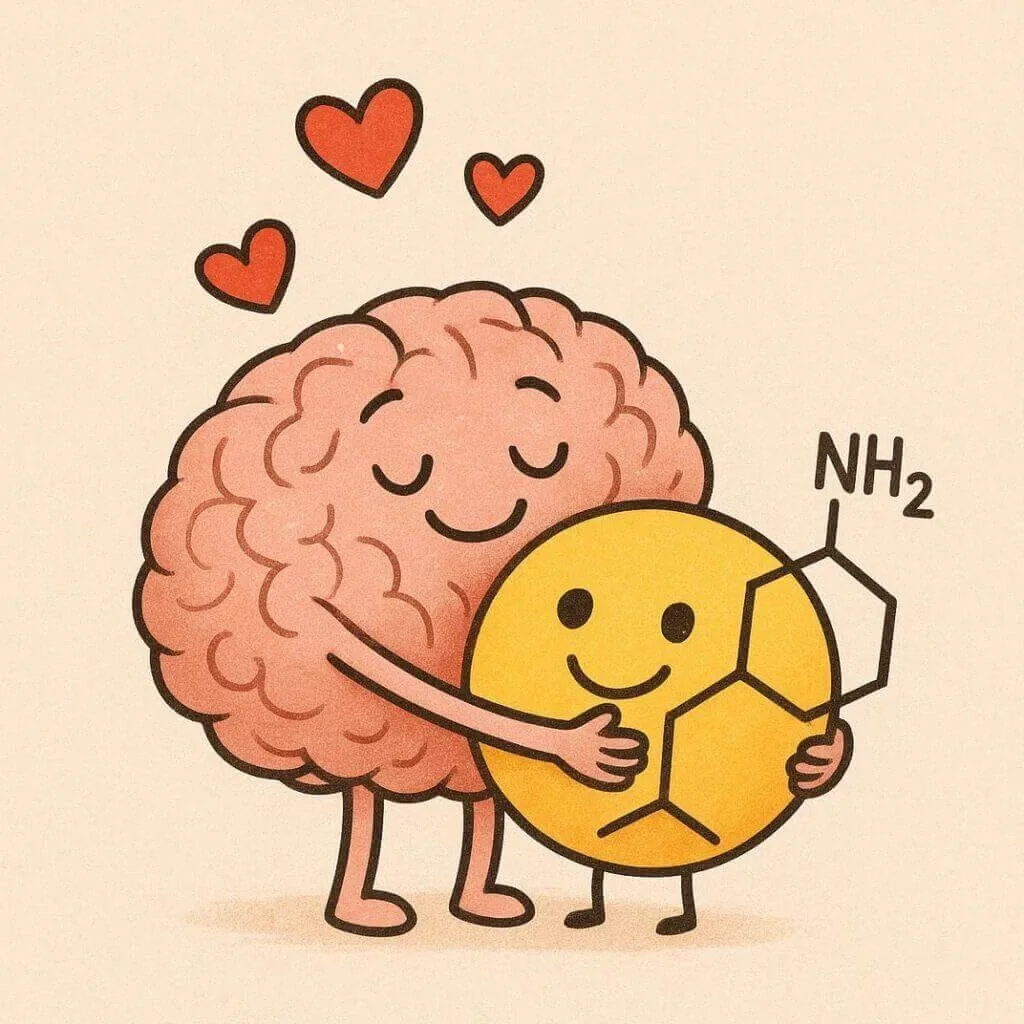
AI isn't just smart, it's strategic. It leverages a fundamental reality of human biology: your brain runs on dopamine.
Whenever you encounter something funny, surprising, or provocative online, your brain releases a small hit of dopamine. That's the exact neurological chemical that reinforces habits and drives compulsion. Algorithms are explicitly designed to trigger those quick neurochemical rewards over and over again.
That is why your feed feels infinite. Every swipe becomes a tiny gamble, driven by the feeling that the next post might be the one that hits just right.
This dynamic isn't accidental. Every time you interact with a post, the algorithm registers a positive reward signal and immediately searches for similar content to recreate that feeling. Over time, this establishes a feedback loop: you scroll, receive a micro-reward, crave another hit, and keep scrolling.
Every tap, pause, or share sends a direct command to the system to give you more of the same. It's a continuous cycle of mutual training: your reactions train the machine, and the machine reshapes your habits in return. But the recommendation engines we use today are only the first chapter of this technology.
The next generation of AI won't just predict your preferences, it will actively generate them.
The Future of Predictive AI

Predictive algorithms are no longer limited to sorting existing content. They are merging directly with generative models to craft content tailored specifically for you.
With the rapid growth of generative tools like ChatGPT and modern media synthesis engines, recommendation algorithms are combining with creation engines. Soon, platforms won't simply curate posts from other users; they will generate text, images, and video in real time based on your exact profile.
What started as a simple reactive loop (you act, the platform reacts) is evolving into a generative loop, where AI simultaneously predicts your desires and builds the content to satisfy them. Personalized media is shifting from curation to custom manufacturing.
The broader implications of this shift are massive:
- Entertainment will become adaptive: Your music playlists, video feeds, and news summaries will automatically tweak their tone and style to match your current mood.
- Advertising will become invisible: Brands won't interrupt your content with traditional ads; they will weave tailored products directly into the stories and visuals you consume.
This is the threshold where predictive AI stops being a convenient feature and becomes a subtle tool of influence.
The Hidden Cost
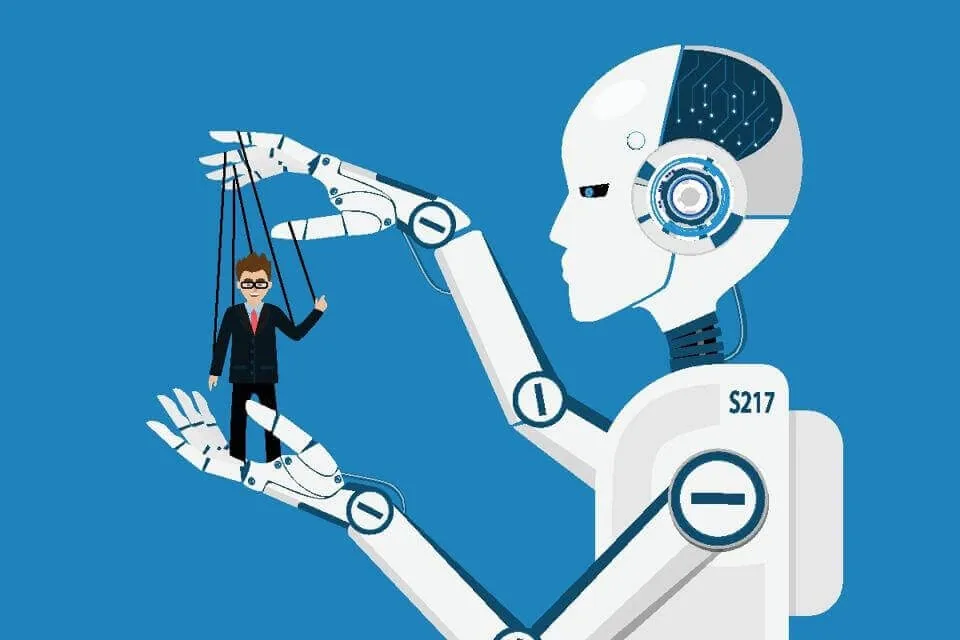
All of this personalization runs on a single essential fuel: your personal behavioral data.
Every click acts as a vote that refines how the system interprets your psychology. But the same algorithms designed to keep you entertained can easily isolate you inside algorithmic echo chambers.
By continuously feeding you content that validates your existing preferences and filtering out opposing perspectives, these systems gradually narrow your field of view until your feed reflects only what you already believe.
The real power of these algorithms lies in their subtlety. They don't need to force your choices directly; they simply need to keep you engaged by managing what you see.
Taking Back Control

Navigating this environment isn't just a technical challenge, it's a psychological one.
As algorithms grow more effective at anticipating human focus, the central question changes from what the technology can build to how much agency we choose to yield to it.
You still hold the power to shape your digital environment, provided you use it intentionally. Every like, pause, and skip serves as a training input for the model, which means you can deliberately retrain your algorithms at any time.
Here are four practical ways to reset your feeds:
- Be intentional: Move past passive scrolling and engage with content mindfully.
- Starve what drains you: Instantly skip or mute posts designed solely to outrage or distract you.
- Feed what grows you: Actively interact with materials that educate, challenge, or genuinely inspire you.
- Diversify your inputs: Follow creators and topics outside your usual comfort zone to broaden your recommendation baseline.
Understanding how these systems function is no longer just about basic tech literacy; it's about protecting your own focus. Coexisting with artificial intelligence starts with taking conscious control of what you allow into your mind.
Remember:
The feed doesn't define your world.
You do.
Final Thoughts
AI doesn't just predict what you want to see next, it continuously shapes how you perceive the world.
Staying aware of that dynamic is your best defense.
If attention is the ultimate currency, choose carefully where you spend it.
How does my feed suggest things I have only thought about but never searched for?
It feels like mind reading, but it is actually just collaborative filtering. The algorithm groups you with millions of users who share your exact digital habits, predicting what you will want next based on what people like you already enjoyed. Even a tiny pause as you scroll gives the system enough data to anticipate your next move.
Why do I get sucked into scrolling for hours even when I am bored?
You are caught in a dopamine loop designed explicitly to exploit your brain chemistry. Every swipe acts like a tiny gamble where you might get rewarded with something funny or shocking, keeping you hooked on the anticipation of the next post. The algorithm notices this attention and instantly delivers more of the same content to keep the cycle going.
Can I actually train my algorithm to show me better content, or is it too late?
You absolutely can retrain your feed at any time by changing how you interact with it. Start aggressively skipping posts that outrage or distract you, and make a conscious effort to like and share things that genuinely inspire or educate you. Treat every single click, pause, and skip as a direct instruction to the machine.