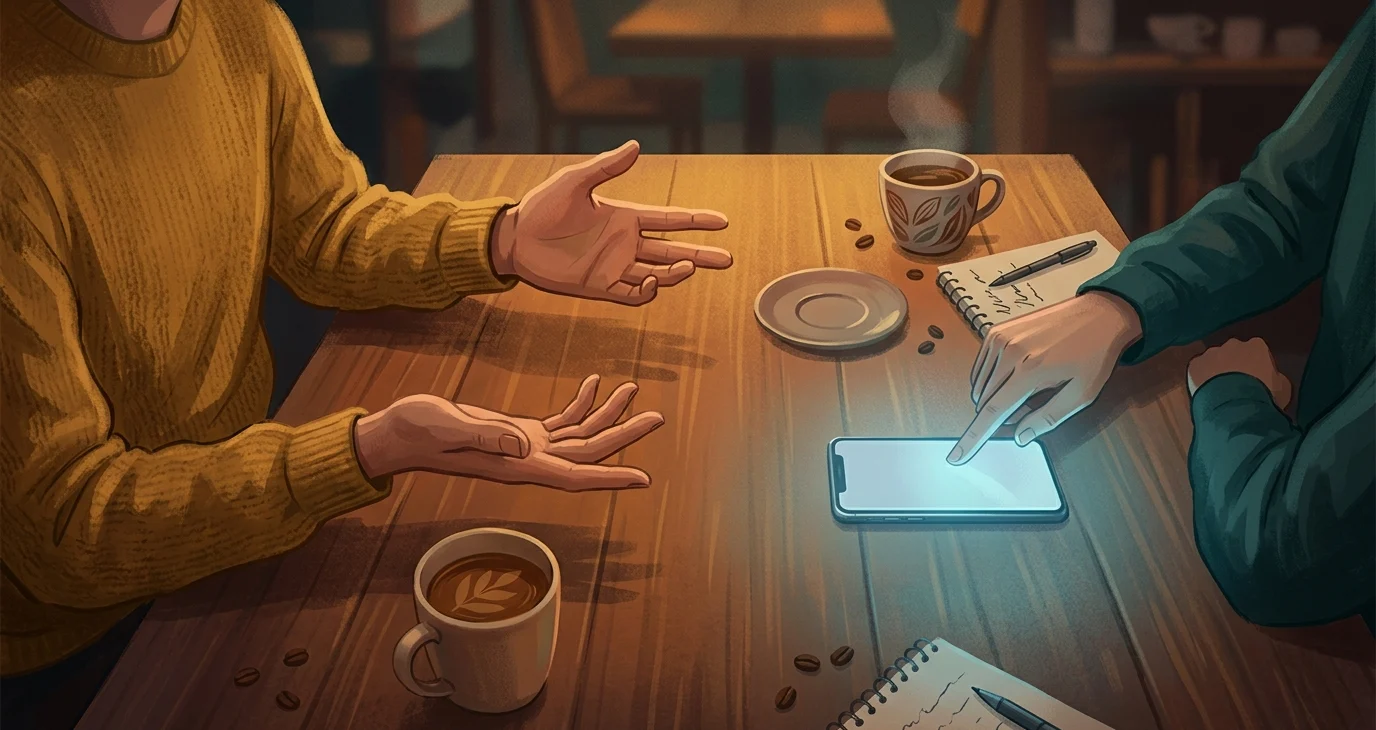

A friend sent me a video last week. 8 seconds long. Someone saying a phrase I didn't recognize, set to a sound I didn't recognize, edited so fast I couldn't tell what the joke even was. He was laughing too hard to type a real reply and just sent 6 more in a row.
I watched all 6. I understood maybe 1.
That isn't just a generational gap. That is what talking to someone who is deep in internet brain rot culture feels like from the outside, and it is worth naming honestly instead of pretending it isn't exhausting.

What Brain Rot Culture Actually Is
Oxford named "brain rot" its word of the year in 2024. Most people laughed it off as a harmless joke about internet memes and Gen Alpha slang.
It isn't a joke. It describes a very specific psychological pattern.
The memes are just the symptom. The way someone reacts to a normal conversation is where the pattern actually shows up.
Brain rot culture happens when your brain gets repeatedly trained to expect a new burst of stimulus every few seconds. Fast cuts, meme formats, and nonsense phrases exist because they offer the fastest possible unit of reward. No setup, no context required, just an instant micro-hit before moving to the next item.
This isn't about mocking anyone caught in the loop. It is about naming, clearly and without cruelty, what it feels like to interact with someone who has been living in it, and why you need to protect your own focus from that same pull.
Why Conversations Feel Different Now

Here is how the pattern actually plays out in real time, without pointing fingers at anyone in particular:
- The joke arrives before the response does - a serious question gets met with a meme reference instead of a real answer, simply because it is the fastest reply available
- Eye contact loses to the screen - someone is physically present, but their core attention is already drifting back to a feed
- Context vanishes immediately - a topic discussed 10 minutes ago is completely forgotten, replaced by 40 new posts seen in the interim
- Sincerity gets deflected automatically - genuine moments get undercut by a joke, because sitting with real emotion for a few seconds feels harder than making a bit out of it
None of this means a person is careless or doesn't value your friendship. It usually means their attention system has been rewired by constant stimulation, and a quiet human conversation is struggling to compete with a much faster algorithm.
Why It's Genuinely Tiring to Talk to Someone Mid-Scroll-Brain
When short-form video damages your attention span, it doesn't look like deliberate rudeness. It looks like a conversation that keeps almost happening.
You say something that takes a few sentences to explain, and you get a meme quote back. You try again, more directly, and get a half-answer accompanied by a quick glance at a phone. The other person isn't ignoring you on purpose; a four-second reward cycle has simply made anything slower than a video cut feel like static.
This drains your energy because you end up doing the mental work for two people. You are holding the thread of the interaction entirely on your own, while their brain has been trained to drop the thread after a few seconds.
This is the exact mechanism explored in The Dopamine Trap. The brain isn't necessarily chasing joy in these moments, but rather the constant anticipation of the next hit, something a normal conversation cannot deliver at breakneck speed.
The Dopamine Loop Behind the Behavior
Compulsive scrolling feeds on variable rewards, operating on the exact same psychological loop as a slot machine. You never know if the next swipe will bring a boring clip or something hilarious, and that unpredictability is what keeps you hooked.
This isn't a core personality flaw. People don't actively decide to become hard to talk to. Their reward systems have simply been calibrated elsewhere, leaving real-time conversations with all their natural pauses and slow moments unable to keep up with an engineered feed.
Once a brain adapts to a 4-second reward cycle, a normal conversation doesn't feel boring to it. It feels broken.
Shifting your perspective here changes everything. It is the difference between feeling resentful toward someone and actually understanding the mechanics of what you are dealing with.
What This Does to Deep Thinking in the Digital Age
Deep thinking and meaningful connection both require cognitive friction: the willingness to sit through an awkward pause or unresolved thought instead of immediately reaching for a screen. You cannot build real focus or deep relationships without learning to tolerate that friction.
| Brain Rot Mode | Deep Conversation Mode |
|---|---|
| Reply before the question lands | Sit with the question first |
| Reference a meme instead of giving a real answer | Full sentence, full context |
| Attention split across multiple feeds | Attention focused entirely on one person |
| Forgotten within the hour | Actually remembered later |
When you spend enough time talking to someone stuck in the left column, the pattern is unmistakable. They can quote dozens of viral trends from the past week, but they cannot recall what you discussed yesterday because nothing sat long enough to stick.
How to Protect Your Own Attention Without Resenting Anyone
The goal here isn't to write people off or act superior. Most people slide into these habits without realizing it after months of feeds rewarding fast reactions over slow reflection. This is about keeping your own mind grounded, not fixing everyone else around you.
- Protect your quiet moments - if every pause in your day gets filled with a screen, your patience for slow, real-life conversations will disappear too
- Catch yourself deflecting with jokes - this habit isn't limited to other people, it sneaks into your own reactions whenever you are overstimulated
- Give conversations room to breathe - a slow start doesn't mean a conversation is boring, it just means it isn't rushing you
- Keep habits that force you to focus - read physical books, read long articles, or engage with media that doesn't offer a quick skip button
If you notice these patterns creeping into your own daily habits, the strategy in The Low-Dopamine Reset offers a clean, practical way to reset your baseline focus.
Staying Present in a Fast-Paced World
It is easy to dismiss this whole topic as overly critical, but it isn't about judging people who enjoy funny internet clips. It is about recognizing when fast-paced media stops being occasional entertainment and starts becoming the only speed your attention can handle.
One is a fun distraction; the other makes genuine human connection almost impossible. It leaves you with conversations that keep almost happening, where one person holds the thread while the other constantly reaches for a punchline or a glowing screen.
Reclaiming your focus isn't about policing anyone else's behavior. It is about catching yourself when your mind starts racing, and choosing to let a slow moment stay slow.
That conscious choice is what allows you to stay grounded, thoughtful, and present, even while the world around you speeds up.
How do I handle a friend who can't stop bringing up memes or looking at their phone when we're hanging out?
Steer the conversation back to real life without turning it into a confrontation. Acknowledge the joke briefly, then pivot to an engaging, direct question about their week or something personal to help pull their attention back into the room.
How do I know if my own attention span is starting to get ruined by brain rot?
Pay attention to what you do during brief moments of downtime. If standing in line or waiting for a friend creates an immediate, restless urge to pull out your phone, your attention baseline has shifted. Another big sign is using quick jokes to brush off sincere or quiet moments.
Is it actually possible to rebuild your attention span once you're used to quick videos?
Yes, but it requires practice. Start by building small, un-skippable habits back into your day, like reading a chapter of a book, listening to an entire album, or going for a walk without a podcast playing. Over time, allowing yourself to sit through slow moments will rebuild your tolerance for deep focus.